TARA VATHUL
PRODUCT DESIGNER
roUTeshare | PITCHED 2022

ROLE
Product Designer
TEAM
2 Product Designers
2 Product Managers
3 Developers
TIMELINE
3 months
SKILLS
Design thinking
User Research
Cross-functional Collaboration
CONTEXT
UT Austin students without cars need a more organized, efficient, and cheaper way of getting
around and off campus because many of them don’t have access to a reliable
source of transportation.
OVERVIEW
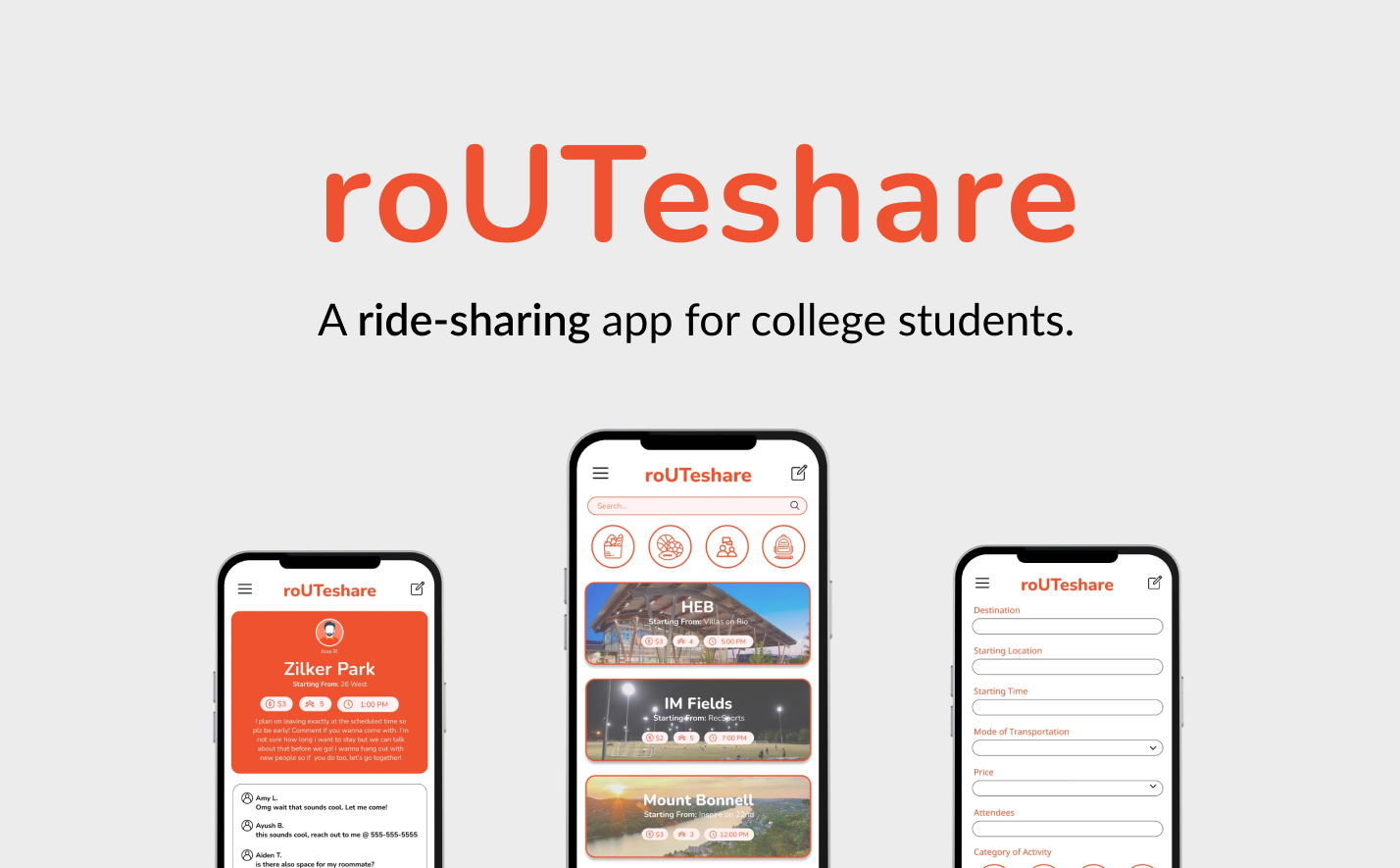
roUTeshare is a mobile ridesharing and social media application designed to connect university students by providing a cost-effective, secure and social way to commute around Austin.
By encouraging social connections, streamlining communication between students, and facilitating payments from riders to drivers, roUTeshare aims to improve the ridesharing experience for students.
PROBLEM
The idea behind roUTeshare originated from an issue I found myself in over the course of my first year on campus. As one of the only people in our friend group with access to a car, my friends would often rely on me to take them grocery shopping, which would be an inconvenience sometimes. However, I still wanted my friends to get their groceries, so I wished they had another reliable way to get to the store, that wasn't Uber or Lyft (since it can be pretty expensive). So after some thought, we came up with this problem statement:
UT Austin students without cars need a more organized, efficient, and cheaper way of getting around and off campus because many of them don’t have access to a reliable source of transportation."
UNDERSTANDING OUR AUDIENCE
The audience we wanted to target was college students, and for the purposes of our MVP, students at UT Austin. As college students ourselves, we could imagine some of the drawbacks of current transportations methods such as existing ride-sharing apps like Uber or Lyft, and public transport such as the Austin metro system. We came up with a few reasons why these methods weren't ideal for UT students:
- Existing ride-sharing apps are expensive, and most college students aren't willing to pay that price to commute off-campus
- While the Austin metro system is free, bus routes can get delayed or canceled, making it unreliable for busy college students
- There's a lack of safety when traveling alone in any mode of transportation
RESEARCH
We then conducted around 60 user interviews, and found:
- 75% of students preferred to travel with another UT student over taking an Uber or Lyft
- 83% of students did not have a car
- 87% of student that did have cars would be willing to give rides for free or for a small fee
IDEATION + PROTOTYPING
We created two user groups, one looking to get a ride, and another looking to give a ride while making some money. We decided to move forward with creating a ride-sharing app specific for UT Austin, and then decided on our priority features, making sure to address all of the user pain points we found in interviews. We found that an added feature of our solution could be to increase social interaction amongst students.
The features we decided to prioritize were:
- A multi-factor authentication process for login to verify student identity and increase safety
- The ability to post planned or requested destinations to the app's homepage/feed
- The option to chat in-app with riders or drivers
DESIGN DECISIONS
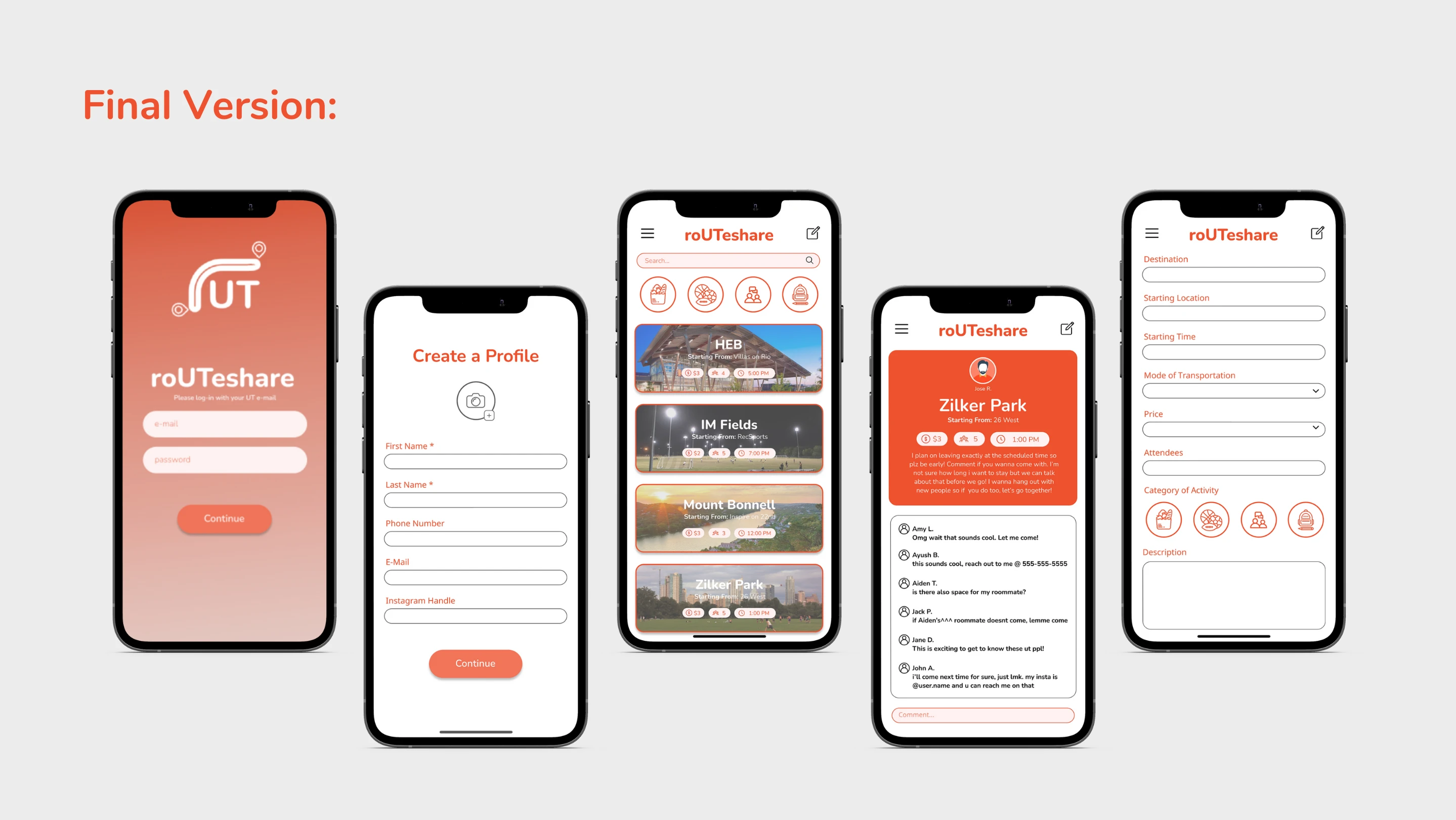
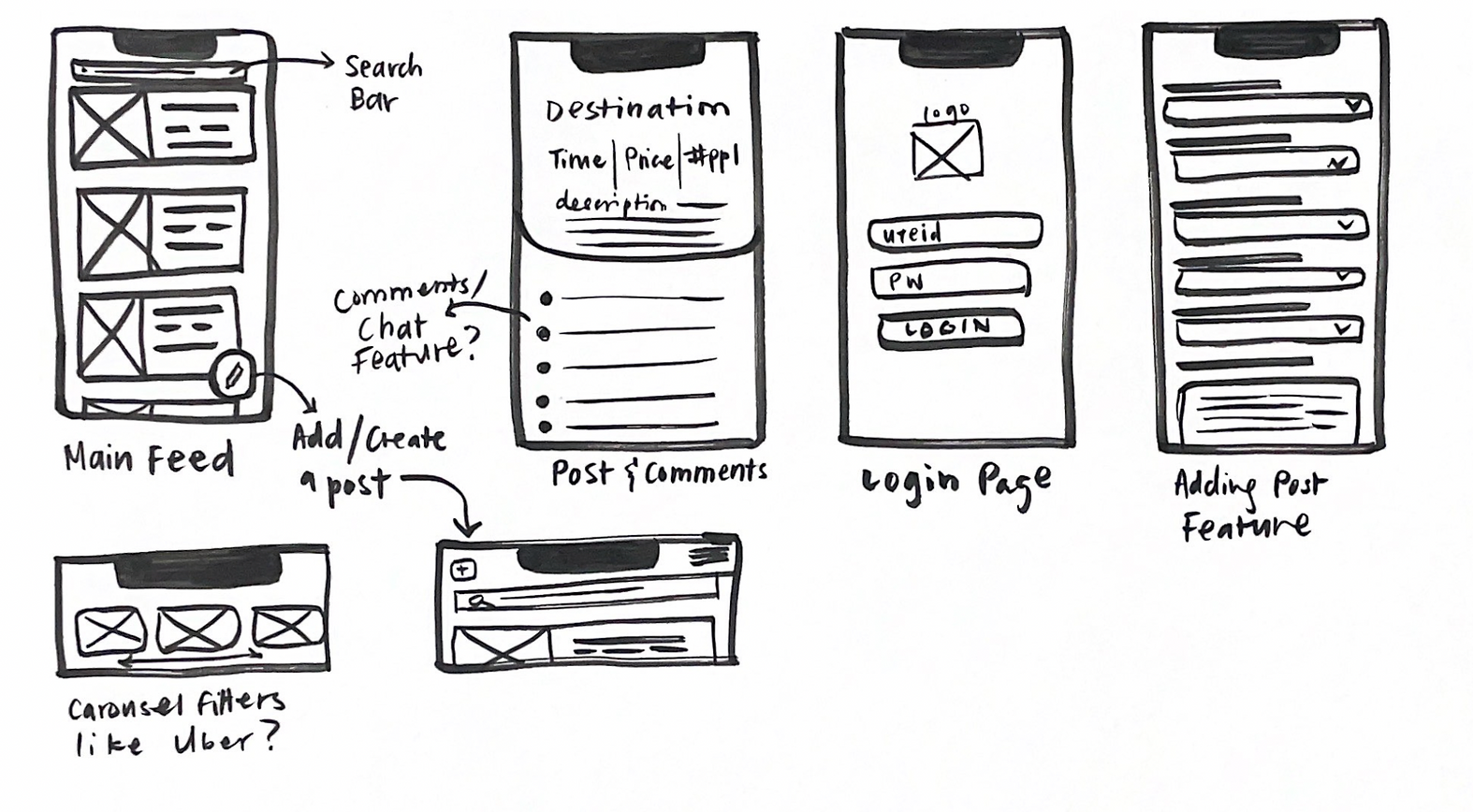
After identifying these priority features, we began to think of the flow of our app. This allowed us to narrow our MVP down to five screens, one for Login, Main Feed, Posting a Destination, and a Planned Route page with a chat feature. We sketched out some low-fidelity wireframes to help bring our idea to life:
REFLECTION + NEXT STEPS
With more time and resources, we would have ideally conducted more user interviews, and planned for potential implementation within our student community. We would also like to add more social features and possible gamification of the app to better cater to college students.
I learned a lot from this project, including the values or user research and different perspectives. I was able to understand that while I may think something is really good, it may not feel the same for others, more importantly potential users of our product. I also learned that the brainstorming process is very important for design thinking, and that coming up with good solutions requires a lot of collaboration and going back and forth. I would have also liked to get user input on the prototype version of our app before it was coded, so that we could see more detailed issues users had while navigating the app. Overall, this project was an amazing learning experience!
------
------
------
Context